
 Cart is empty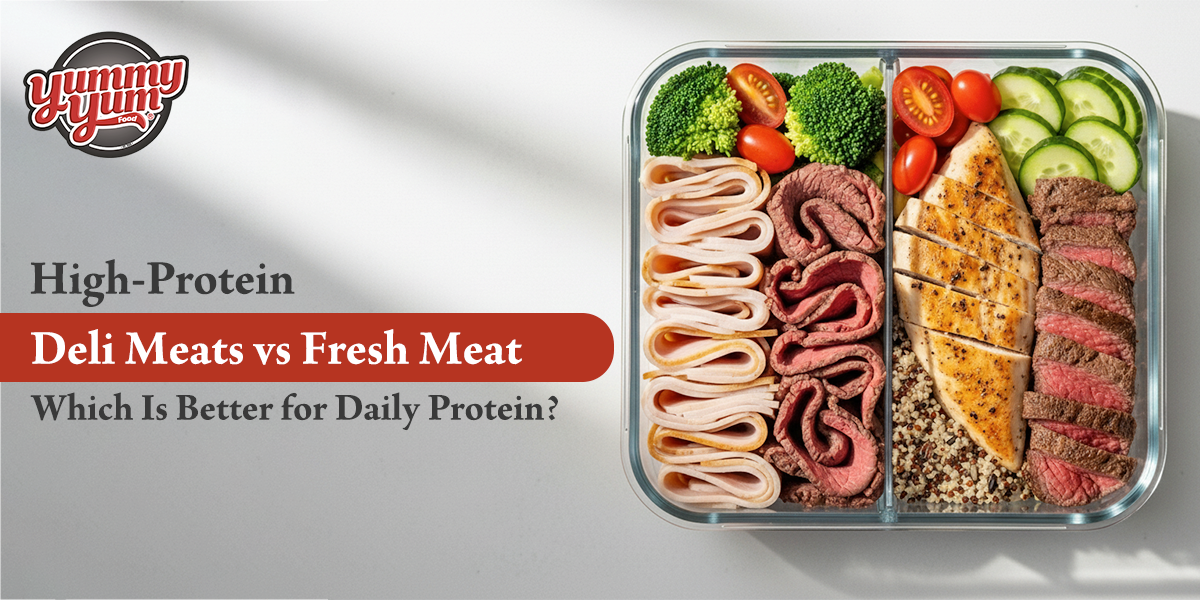
High-Protein Deli Meats vs Fresh Meat: Which Is Better for Daily Protein?
High-protein diets are essential for supporting muscle growth, enhancing metabolism, and sustaining energy throughout the day. For many health-conscious individuals, the question arises: Should daily protein come from high-protein deli meats or fresh meats like chicken, beef, or turkey? While deli meats offer convenience, portability, and consistent portion sizes, fresh meats are naturally nutrient-dense and free of preservatives.
Consumers are often confused about which option fits best into a balanced diet, especially when shopping for healthy deli meat. Trusted suppliers such as Yummy Yum Food have made it easier to access high-quality, protein-rich deli options that complement fresh meat consumption. This comprehensive guide will help you understand the differences, benefits, and practical strategies for effectively meeting your daily protein goals.
What Are High-Protein Deli Meats?
High-protein deli meats are processed or sliced meat products designed to deliver a higher amount of protein content per serving than regular deli cuts. These include options like turkey breast, lean roast beef, and chicken breast slices, often labeled as low-fat or low-sodium. Unlike conventional deli meats, which can contain excessive fat, sugar, or fillers, high-protein deli meats prioritize protein content while minimizing unnecessary additives.
Many of these products are portion-controlled, making them ideal for sandwiches, wraps, salad bowls, and quick on-the-go meals. The convenience of these deli meats is unmatched, especially for busy professionals, students, or families. Brands like Yummy Yum Food focus on producing clean, healthy deli meat options that maintain flavor, texture, and protein content without compromising nutritional integrity.
What Is Fresh Meat?
Fresh meat refers to unprocessed, uncooked cuts of chicken, beef, turkey, or pork that have not been sliced, seasoned, or treated with preservatives. Fresh meat is highly nutrient-dense and offers a full profile of essential vitamins and minerals, including iron, zinc, and B vitamins, which are critical for energy, immune function, and overall health. The protein content in fresh meat varies by cut and fat content, with lean cuts like chicken breast or beef tenderloin providing the highest concentration.
Preparing fresh meat allows for flexibility in cooking methods, including grilling, roasting, stir-frying, or slow cooking. Unlike deli meats, fresh cuts require careful handling, storage, and preparation to avoid spoilage, but they provide superior flavor and nutrient retention. Using fresh meat as the primary protein source allows for customization of seasoning, portion sizes, and cooking techniques.
Protein Comparison: High-Protein Deli Meats vs Fresh Meat
When evaluating protein content, both high-protein deli meats and fresh meats provide ample protein to meet daily requirements. For instance, turkey breast deli meat offers 20–24 g of protein per 100 g, while fresh chicken breast provides 21–23 g per 100 g. Lean roast beef slices contain approximately 22 g of protein, while a fresh beef steak ranges between 22 and 26 g. Even low-sodium ham, a common deli option, provides 16–18 g per 100 g. While fresh meat typically retains more of its natural micronutrients, high-protein deli meats excel in convenience, portability, and precise portion control.
Choosing between the two often comes down to lifestyle and meal planning. Deli meats are perfect for ready-to-eat meals, office lunches, or travel-friendly snacks, whereas fresh meat shines in home-cooked meals where flavor, nutrient retention, and versatility are priorities.
Protein Per 100g
Turkey breast (deli meat): 20–24g protein
Chicken breast (fresh): 21–23g protein
Lean roast beef (deli): 22g protein
Beef steak (fresh): 22–26g protein
Lean ham (deli): 16–18g protein
Benefits of High-Protein Deli Meats
High-protein deli meats provide unmatched convenience for busy lifestyles. They are pre-sliced, ready-to-eat, and offer consistent nutritional information per serving, which helps with accurate tracking of daily protein intake. Portion control is straightforward since each slice or serving contains a predictable amount of protein, making it easier to meet fitness or dietary goals.
These deli meats are highly versatile and can be used in sandwiches, wraps, salads, and snack rolls, or paired with whole grains and vegetables for complete meals. With a variety of options available, ranging from low-fat, smoked, and spicy slices of lean roast beef to high-protein deli meats, they cater to diverse taste preferences without sacrificing nutritional value. They are particularly beneficial for individuals who need a protein-rich meal or snack without the time or effort required to prepare fresh meat daily.
Key Benefits
Quick protein boost for on-the-go meals.
Consistent and predictable protein content per serving.
Longer shelf life compared to fresh meat.
Versatile for sandwiches, wraps, salads, or snacks.
Benefits of Fresh Meat
Fresh meat provides high-quality protein and a wide array of essential nutrients that support overall health. Lean cuts are rich in protein while remaining low in fat, and the absence of preservatives ensures a natural, wholesome eating experience. Fresh meat offers flexibility in cooking styles, including grilling, roasting, sautéing, and slow cooking.
It also provides better flavor retention and the ability to season and portion meals to taste. Fresh high-protein meat is ideal for home cooks aiming to maximize nutrient intake and for those who enjoy customizing dishes for a balanced, protein-focused diet. When combined with vegetables, grains, and healthy fats, fresh meat can be a cornerstone of a nutrient-rich, well-rounded eating plan.
Common Problems & Pain Points
High-protein deli meats, while convenient, often contain elevated levels of sodium and, in some cases, preservatives such as nitrates or nitrites. Overprocessed products can reduce nutritional quality and may include unwanted fillers or flavor enhancers. Fresh meat, although nutrient-rich, requires significant preparation time, careful storage to prevent spoilage, and precise cooking to ensure safety and taste.
Portion control can also be more challenging with fresh cuts unless weighed or measured carefully. Choosing high-quality brands and balancing deli meats with fresh meat can help overcome these challenges, ensuring daily protein goals are met efficiently and healthily.
Solutions: Choosing the Best Protein Source
When selecting high-protein deli meats, it is crucial to check the protein per serving, opt for low-sodium, preservative-free options, and purchase from trusted brands such as Yummy Yum Food.
Moderation is key: incorporate deli meats alongside fresh protein sources to ensure a diverse nutrient profile. Fresh meat selections should focus on lean cuts like chicken breast, turkey, or beef tenderloin, cooked safely and stored properly. Proper meal planning can allow both deli and fresh meat to coexist in a diet, offering convenience, variety, and nutritional balance.
Tips for High-Protein Deli Meats
Check protein per serving on nutrition labels.
Choose low-sodium and preservative-free options.
Buy from trusted brands like Yummy Yum Food.
Use in moderation alongside fresh foods.
Practical Daily Protein Planning
Combining deli meats and fresh meats allows for flexibility throughout the day. For example, scrambled eggs with turkey slices can provide a quick breakfast, a grilled chicken salad can serve as a nutrient-dense lunch, and a lean beef steak can make an ideal dinner.
Snacks can include lean deli meat roll-ups or wraps with vegetables for extra fiber. Incorporating plant-based protein sources, such as beans or tofu, adds variety and ensures a balanced intake of essential amino acids. Using both deli meats and fresh meats strategically ensures convenience without sacrificing nutrient quality.
Best High-Protein Deli Meats & Brands
Look for clean, high-protein deli meats with transparent labeling and minimal additives. Trusted brands provide consistent quality, portion-controlled servings, and accurate nutrition information. Yummy Yum Food offers options like low-sodium turkey breast, lean roast beef slices, and spicy chicken breast slices. These products are convenient for on-the-go meals and maintain high protein content without compromising health. Check Yummy Yum Food product pages for full nutrition details.
Who Should Include High-Protein Deli Meats?
High-protein deli meats are perfect for busy professionals, athletes, families, and students seeking portable, ready-to-eat meals. They are particularly useful for people who need quick protein intake without cooking. Combining deli meats with fresh meat and the best meat for protein ensures a balanced diet, supporting both convenience and nutrient density. Moderation and smart selection are key to making high-protein deli meats a consistent part of a healthy lifestyle.
Conclusion
Both high-protein deli meats and fresh meat are excellent sources of protein. Deli meats provide convenience, portion control, and ready-to-eat options, while fresh meat supplies superior nutrient density, flavor, and flexibility in
Frequently Asked Questions (FAQ)
Q1: Are high-protein deli meats better than fresh meat?
Both are good. Deli meats are convenient and portioned; fresh meat has more nutrients. Use both for balance.
Q2: How much protein is in healthy lunch meat?
Around 20–24 g per 100 g for turkey or chicken, 22 g for lean roast beef.
Q3: Which is the best high-protein deli meat?
Low-sodium turkey breast, lean roast beef, and spicy chicken slices from trusted brands like Yummy Yum Food.
Q4: Can I eat deli meats daily safely?
Yes, if you choose low-sodium, preservative-free options and balance with fresh protein and veggies.
Q5: Which deli meat brands are healthiest?
Brands with clean ingredients and transparent labeling, like Yummy Yum Food, are the healthiest choices.
Note: Want to know more about High-Protein Deli Meats? Don’t forget to read one of our best articles on “Top High-Protein Deli Meats for Clean Eating and Balanced Diets.“