
 Cart is empty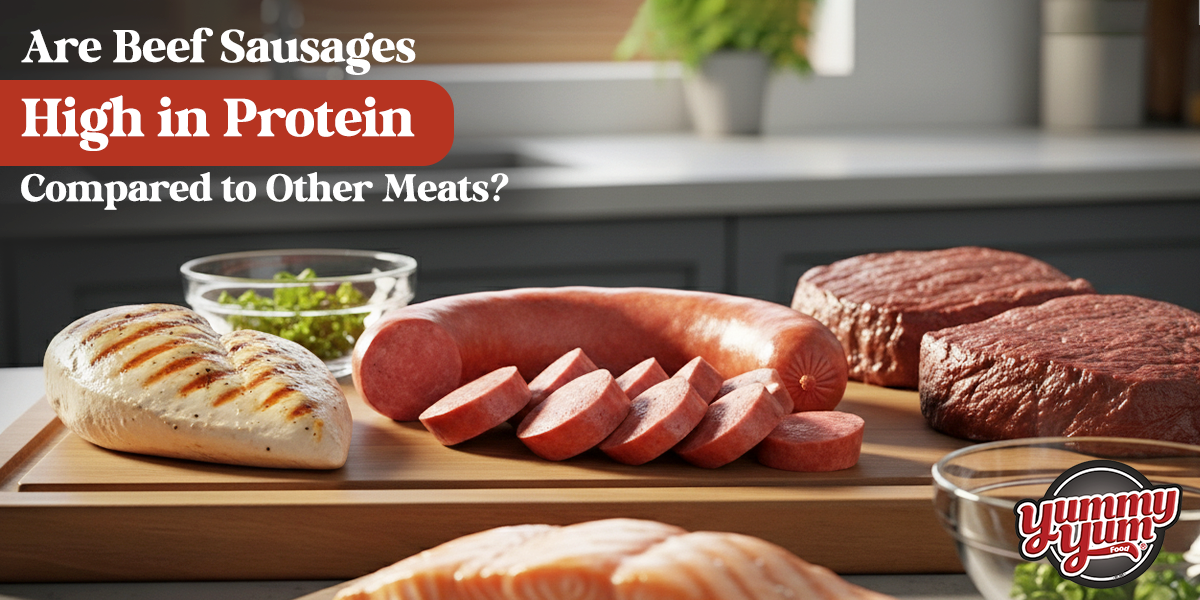
Are Beef Sausages High in Protein Compared to Other Meats?
The demand for high-protein foods continues to grow as more people focus on muscle building, weight management, and overall health. Protein supports tissue repair, energy levels, and long-term wellness. Because of this, many shoppers compare different meat options before buying.
One common question is whether beef sausages are as protein-rich as steak or chicken. With popular varieties like beef smoked sausage, smoked beef sausage, and spicy beef sausage, consumers want to know if these flavorful options also deliver strong nutrition.
This guide breaks down protein levels, clearly compares meats, and helps you choose the best beef sausage for your health goals.
What Are Beef Sausages?
Beef sausages are made from ground beef blended with salt, herbs, and spices. They are stuffed into casings and sold fresh, cured, or smoked. The flavor and texture depend on the fat ratio and preparation method.
Fresh sausages require cooking before eating. In contrast, smoked beef sausage and beef smoked sausage are often pre-cooked or cured, which gives them a longer shelf life and deeper flavor. Some varieties, such as spicy beef sausage, include chili flakes or bold seasoning for extra heat.
Premium suppliers like Yummy Yum Food focus on quality meat cuts and balanced seasoning. When selecting sausages, ingredient quality plays a major role in both taste and nutrition.
Protein Content in Beef Sausages
On average, beef sausages contain between 12 and 18 grams of protein per 100 grams. However, this range can vary depending on fat content and processing.
Fresh sausages with higher lean meat ratios tend to offer more protein per serving. Smoked beef sausage may contain slightly less protein if additional fats or fillers are included during processing.
Fat content directly affects protein density. A sausage with more fat will have fewer grams of protein per 100 grams compared to a leaner option. That is why reading the nutrition label is essential.
Processing also plays a role. Premium or artisan products often focus on meat quality, while lower-cost versions may prioritize fillers. Choosing carefully helps ensure you get better protein value.
Protein Comparison Per 100g
Beef Sausages – 12–18g protein
Chicken breast – 20–23g protein
Lean beef steak – 22–26g protein
Pork sausage – 10–15g protein
From this comparison, chicken breast and lean steak contain more protein per serving. However, beef sausages still offer moderate to high protein, especially when lean varieties are selected.
Benefits of Beef Sausages as a Protein Source
One major advantage of beef sausages is convenience. They are easy to cook, quick to prepare, and widely available. For busy individuals, this matters.
They are also versatile. You can grill them for BBQs, slice them into pasta, or serve them with breakfast. Beef smoked sausage options are especially useful for meal prep because they store well.
Another benefit is flavor. Compared to plain chicken breast, sausages provide a richer taste, making it easier for some people to maintain a protein-focused diet.
Key Benefits
High protein with rich flavor
Versatile for multiple recipes
Portable and quick to prepare
Available in spicy and mild options
These benefits make beef sausages appealing for families, athletes, and working professionals.
Problems and Pain Points When Choosing Beef Sausages
Despite their benefits, not all beef sausages are equal. Some products contain high fat levels, which lowers protein density and increases calorie intake.
Sodium is another concern. Processed varieties, including certain smoked beef sausage options, may contain elevated salt levels for preservation.
Labels can also be confusing. When searching for the best beef sausage brands, shoppers often struggle to understand ingredient lists or protein ratios.
Buying online adds another challenge. When you buy beef sausages online, it can be difficult to assess freshness and quality without trusted reviews.
Solutions: How to Choose High-Protein Beef Sausages
Check the nutrition label and compare the protein-to-fat ratio.
Choose lean or low-fat varieties.
Compare ingredient lists carefully.
Buy from trusted suppliers like Yummy Yum Food.
Research the best beef sausage brands before purchasing.
These simple steps help ensure better nutritional value. When you buy beef sausages online, always check reviews, storage methods, and delivery policies. Quality matters more than price.
For more guidance on healthy meat choices, consider linking to your related blog post on storing halal meat properly. For external credibility, citing trusted health resources such as the WHO or national dietary guidelines can lend authority.
Beef Sausages vs Other Meats—Detailed Comparison
When comparing beef sausages to chicken breast, chicken clearly wins in protein density. It is leaner and contains fewer calories per gram of protein.
Compared to turkey, sausages often have more fat but a stronger flavor. Turkey may offer a slightly better protein-to-calorie ratio.
When compared to pork sausage, beef sausages generally contain more protein and have a firmer texture. This makes them a better option among processed meats.
Plant-based alternatives vary widely. Some offer similar protein content, but ingredient lists may include soy isolates or additives. In contrast, high-quality beef sausages focus primarily on meat.
The key takeaway is simple: Beef sausages can be high in protein, but nutritional value depends on the specific type and brand.
Best Beef Sausage Types for Protein Lovers
For those focused on protein, lean options are ideal. Beef smoked sausage offers extended shelf life and convenience. It works well for meal prep and outdoor cooking.
If you enjoy bold taste, spicy beef sausage delivers flavor without sacrificing protein. Just check the fat percentage before buying.
Artisan or premium products from reliable suppliers often provide better meat ratios. When you buy beef sausages online, choose platforms that clearly list nutritional details and storage practices.
Brands that emphasize transparency and ingredient quality typically deliver more consistent protein.
Who Should Eat Beef Sausages?
Athletes may benefit from beef sausages as part of a balanced meal plan. The protein supports muscle repair and recovery.
Busy professionals appreciate the convenience. A quick grilled sausage with vegetables creates a simple high-protein meal.
Families enjoy versatility. Sausages work for breakfast, lunch, or dinner, making them practical for different tastes.
Keto or low-carb dieters also find them suitable, as a wide variety contains minimal carbohydrates.
However, portion control is important. Even though beef sausages contain protein, they may also include fat. Pairing them with vegetables or whole grains creates a more balanced meal.
Frequently Asked Questions (FAQ)
Q1: Are beef sausages high in protein compared to steak?
Lean steak usually contains more protein per 100 grams than other cuts. However, lean sausages can still provide moderate to high protein.
Q2: Is smoked beef sausage healthy?
It can be part of a balanced diet if sodium and fat levels are reasonable. Always check the label.
Q3: What is the best beef sausage for muscle gain?
Look for high-protein, low-fat varieties with minimal fillers. Lean options are better for muscle-focused diets.
Q4: Can I buy beef sausages online safely?
Yes, if you purchase from trusted suppliers that use proper cold-chain delivery systems.
Q5: Which are the best beef sausage brands?
The best beef sausage brands focus on high-quality meat, transparent labeling, and balanced seasoning.
Note: Want to know more about Beef Sausages? Don’t forget to read one of our best articles on “What’s the Difference Between Fresh, Smoked, and Cooked Beef Sausages?”
Conclusion
So, are beef sausages high in protein compared to other meats? The answer is yes, moderately to highly, depending on the type you choose.
Protein levels vary based on fat content and preparation methods. Lean varieties can compete well with other meat options, especially when quality ingredients are used.
The smartest approach is to prioritize nutrition labels, trusted suppliers, and ingredient transparency. In the end, choosing quality over price ensures better health value and better taste.